
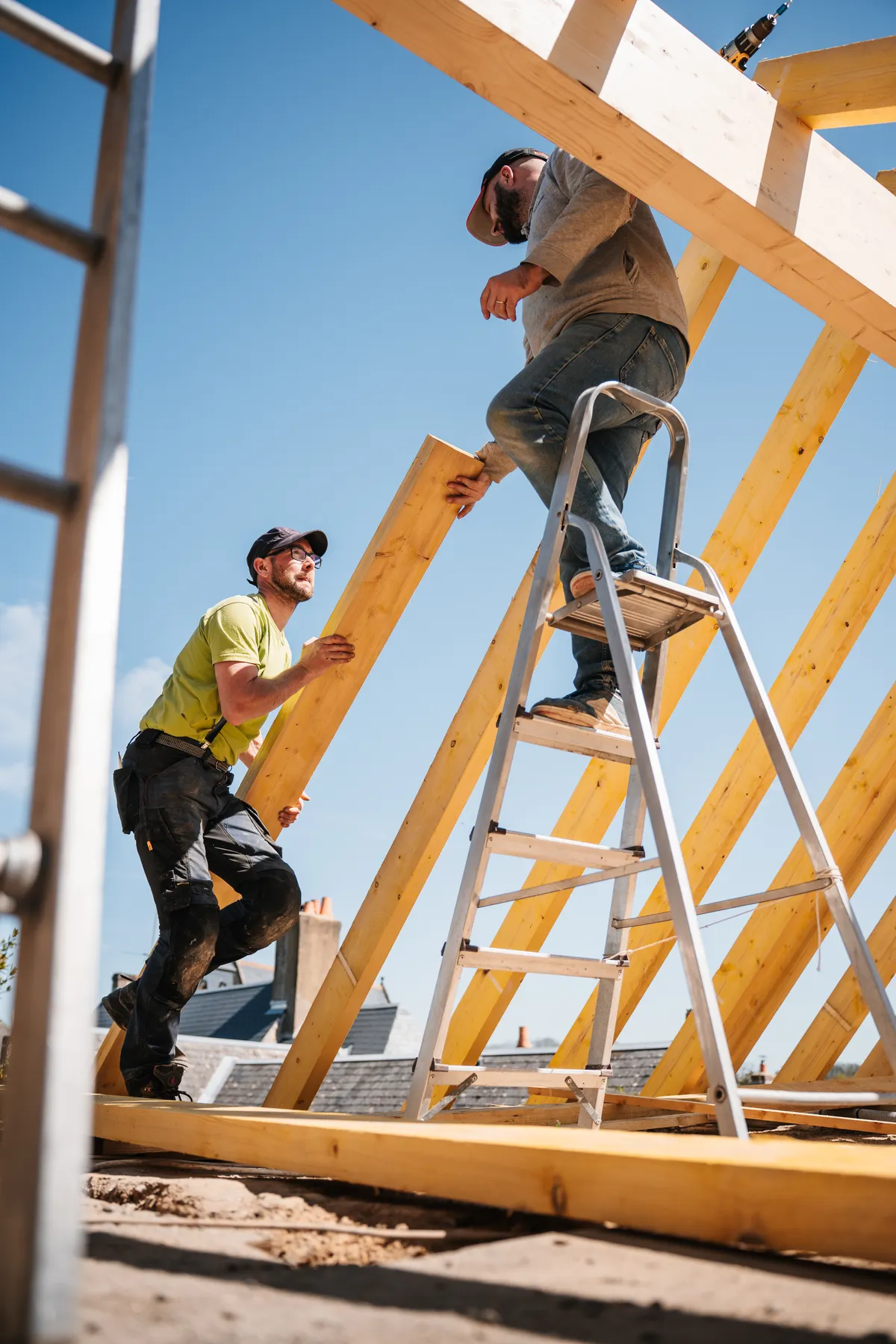
Roof Decking Damage: What Homeowners Should Know
The roofer takes off old shingles and finds a patch of dark soft wood. You did not see it from the ground and it was not in the original price. Here is what that wood does and what to ask before agreeing to extra work.
Eau Claire Roof Hub shares roofing information and may help connect callers with independent contractors. We do not perform repairs.
What roof decking actually does
Roof decking is the solid surface fastened across the roof framing. It is often made from plywood or oriented strand board. The shingles or other roof covering sit above it with layers of water protection in between. The decking supports the covering and gives roof fasteners a place to hold.
Roof decking is not the same as the rafters or trusses that form the main roof structure. Damage to the deck may require replacing sheets or sections. Damage to framing can become a structural repair. That difference affects the work needed and may change permit requirements. A contractor should explain exactly which layer has failed.
How water can damage the deck
Rain may enter through missing shingles, failed flashing or an old pipe boot. Over time it can soak the wood below. Water can also build up from condensation when warm indoor air reaches cold attic surfaces. A dark board does not prove which path supplied the moisture.
A qualified inspector may look at the roof surface and the underside of accessible sheathing. Wet insulation and stained framing can provide clues. Our attic ventilation guide explains why indoor moisture can matter even when the roof covering has no obvious hole.
Ice dams and hidden water
During a winter thaw, meltwater may back up under shingles at a cold eave. If protection is missing or has failed, water can reach the deck. The effect may only become visible after spring or during a later replacement. See our ice dam guide for the melt and refreeze process.
Signs you might notice before roof work
A sagging patch of roofline deserves careful attention. Indoors you might see a spreading ceiling stain or recurring damp attic wood. Softness cannot be safely tested by walking on the roof. Old roofing materials can hide weak spots until the covering is removed.
Some dark wood is only discolored and may still be sound. Wood that is soft, broken or unable to hold fasteners may need replacement. A roofer should show clear evidence and explain what they found. When framing itself may be weak, bring in a qualified structural professional rather than assuming a sheet replacement solves it.

What happens when tear-off reveals damage
The crew removes shingles and underlayment over the agreed area. That exposes the deck so hidden damage can be checked. Some sheets may need to come off while the surrounding deck can remain. The replacement material and fastening plan must suit the roof system and local requirements.
Ask the contractor to photograph the exposed area before new material covers it. The written change order should say how many sheets or sections will be replaced and how the extra cost was calculated. It should also identify the cause of the damage when it can be determined. If the entry point remains open, new wood can be damaged again.
Why quotes handle decking differently
One estimate may include a small allowance for replacing damaged sheets. Another may price every sheet separately after tear-off. A third may exclude it entirely. These are not equivalent bids. Ask about the price per sheet or area and what labor or disposal that amount includes.
Contract terms should explain who approves a change. Make that decision before the roof is opened if possible. Otherwise you may feel pressured while the house is exposed to weather. Our roof replacement guide includes other line items that belong in a complete proposal.
How decking affects nails and waterproofing
A shingle roof depends on fasteners holding in sound decking. If the wood is too weak to hold a nail securely, putting new shingles over it does not solve the underlying problem. Flashing and water protection also rely on a stable surface at the roof joints. The weather layers above the deck are covered in our underlayment guide. To compare different repair paths, explore our roofing in Eau Claire overview.
The Asphalt Roofing Manufacturers Association explains the role of underlayment and ice and water barriers as parts of a complete system. The deck beneath those layers should be fit for the planned roof covering. Different materials and roof designs require different fasteners and support details.
Repair or replace a larger section?
A small wet area near one pipe boot may allow a local roof repair once the leak source is corrected. Widespread soft decking points to a larger problem. A contractor should show how far the damage extends before deciding whether an entire slope needs new materials.
Be cautious of a repair that simply covers soft wood with a new layer. Equally, a large replacement should not be approved without a reason. Ask for the moisture source and the boundaries of the damaged area. Review our roof repair guide when the problem appears limited.
Permits and safety when structure is involved
The City of Eau Claire uses different permit paths for replacing roof covering and replacing the roof structure. Its permit guidance directs structural work such as a roof collapse through Remodel/Alteration. The right process depends on the address and work. Ask the contractor to identify which authority has jurisdiction. An uneven roofline calls for the safety checks in our sagging roof guide.
If you see new structural sagging or hear cracking in a roof, keep people out of the affected area and seek urgent qualified help. Do not enter an unsafe attic to photograph the decking. A contractor’s quote is not a substitute for structural evaluation when framing damage may be present.
Questions about plywood and other roof boards
Contractors may use plywood or oriented strand board when replacing damaged sheathing. Both are common building products when selected for a suitable roof design. The right thickness and fastening method depend on the roof framing and the roof system being installed. Ask for the material specification rather than treating every sheet as interchangeable.
A small wet mark on a board does not always mean the entire sheet has failed. The professional should consider whether the wood remains sound and can hold the required fasteners. Rot or serious loss of strength needs more than drying. When the issue reaches rafters or trusses, a structural review may be required. Do not accept a simple sheet replacement as proof that damaged framing is safe.
Ask whether the repair will also restore the underlayment and ice protection above the replaced area. A new board left under a poorly sealed joint may get wet again. The repair is complete only when the support and water control layers work together.
What a good repair record should include
Keep photographs showing the damaged wood before it was removed and the new material before it was covered. Save the change order and final invoice. If the contractor found a pipe boot leak or other entry point, make sure the record says it was repaired too.
These details help if you have another leak later. They may also matter when you sell the house. The goal is not to replace as much wood as possible. It is to restore a sound roof surface and fix the water or moisture problem that damaged it.
Ask what the damaged wood changes
Call with your decking or leak concern. We can discuss the questions worth asking and may help you reach an independent roofing professional for an inspection.


