

Chimney Flashing Leaks and Repairs
A brown mark appears beside the fireplace after heavy rain. The chimney looks fine from the yard. Water can still pass through a small gap where the roof meets the brick. Finding that gap matters more than simply covering the stain.
Eau Claire Roof Hub shares information and may help callers connect with independent roofing contractors. We do not perform the work.
Why chimneys are common leak points
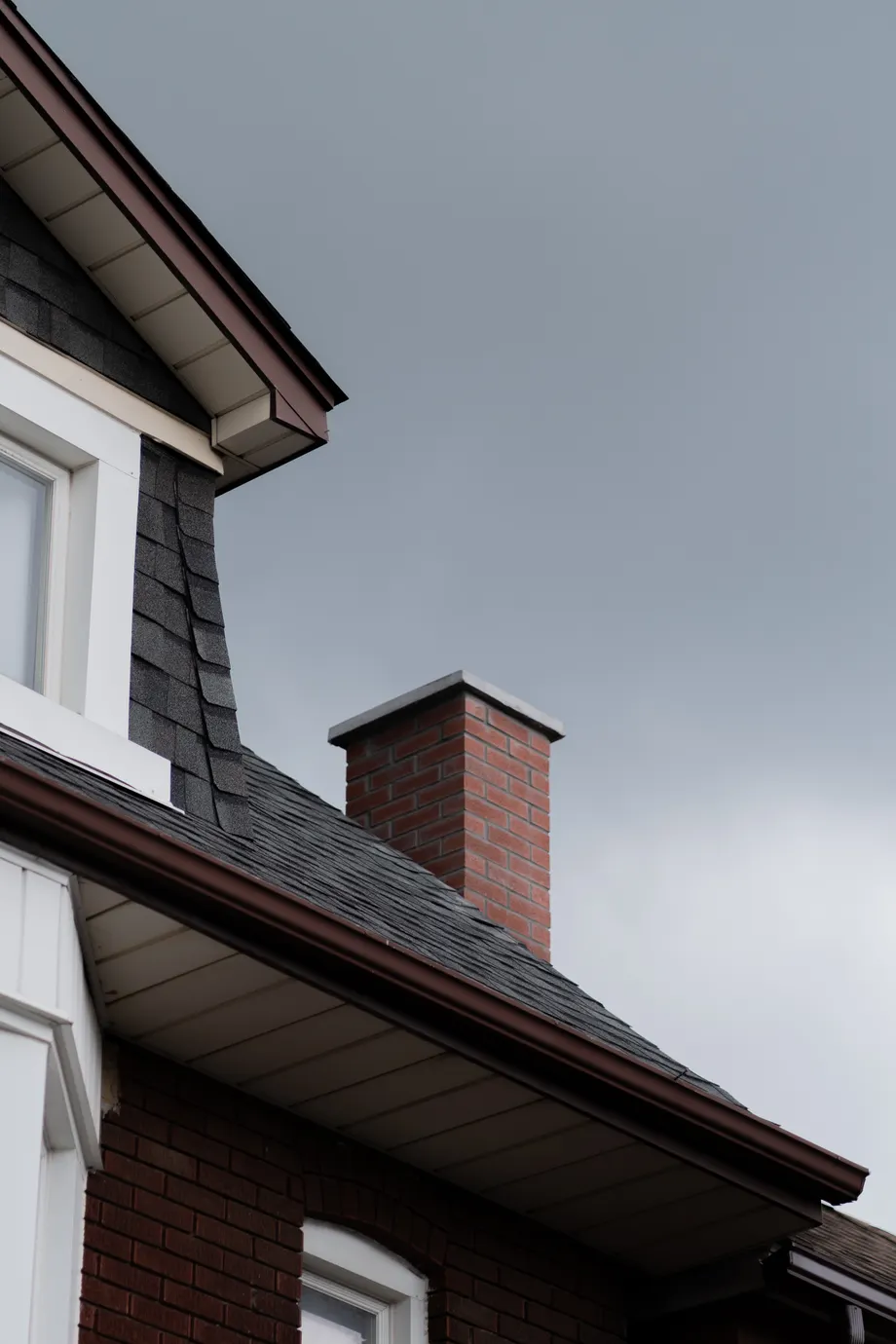
A chimney interrupts the sloped roof. Rain runs down the shingles and reaches the raised brick surface. To guide water around it, roofers fit pieces of metal called flashing. Those pieces sit at the junction between roof covering and chimney. If metal moves or rusts, water may find a path underneath.
A leaking chimney can also have trouble in the masonry itself. Cracked mortar or a damaged cap may let water enter from above. A ceiling stain near the chimney does not prove the metal is at fault. The inspection needs to separate roof flashing from brick and chimney problems.
The flashing parts worth knowing
Step flashing along the sides
Short metal pieces overlap with courses of shingles along the side of a chimney. They move water down onto the roof rather than behind the covering. Covering the entire side with one strip of caulk is not a lasting substitute for a correctly layered system. Similar metal overlaps protect roof-to-wall joints.
Counterflashing against the brick
Another piece of metal covers the upper edge of the step flashing. It helps stop water entering where metal meets masonry. A roofer should check how the counterflashing is secured and sealed. Loose edges may let rain drive behind the joint during strong wind.
Back pan and cricket
A wide chimney can catch water on its uphill side. A metal pan or a small raised roof shape called a cricket can help divert water around it. The right design depends on chimney width and roof pitch. A contractor should explain which parts your roof has and whether they drain properly.
What you may notice inside and outside
Inside the house, moisture may show as stained drywall beside a chimney chase. The mark might grow during wind-driven rain. In an accessible attic you may see darker wood beside the brick. These signs help locate a possible water path but cannot confirm its entry point.
Outside, loose metal or a gap near the brick deserves attention. Avoid reaching it with a ladder. Photograph the chimney from the ground or a safe upper window. A professional can inspect the joints and test likely causes when conditions allow. Keep notes about whether the leak happens only during rain or also when snow melts.
Why sealant alone may not fix the leak
Roof sealant can sometimes protect a small joint temporarily. It cannot rebuild missing step flashing or restore damaged wood beneath the shingles. New caulk over old loose metal may hide the problem until the next heavy rain. It can also make a future inspection harder. For broader guidance, the Eau Claire roofing homepage covers repair and replacement choices.
Ask what the proposed repair will actually replace. A proper flashing repair may require lifting shingles near the chimney. The crew should inspect the deck for wet or soft wood before installing new pieces. The goal is to put the water-shedding layers back in order. Read our roof repair guide for the difference between a local fix and larger roof work.
Chimney brick problems need another trade
Some leaks start at cracked masonry or a broken chimney crown. The crown is the top surface that helps shed water away from the flue area. Missing mortar and open joints can also let rain soak into brick. These defects may need a mason or chimney specialist rather than only a roofer.
A good assessment should state which part is responsible for the repair. The roofer may handle the flashing while a masonry professional fixes the chimney structure. When multiple trades are involved, ask who checks that their work meets at the joint. A clear handoff can prevent each contractor from blaming the other if the leak returns.
What a written repair estimate should show
Look for the chimney location and the parts to be removed. The quote should say whether new step flashing and counterflashing are included. Ask how nearby shingles will be reused or replaced. Check whether old sealant and damaged metal will be removed. If wood damage is found, know how extra work will be approved.
Prices vary with chimney size, roof slope and access. A small joint fix is not the same job as rebuilding a full flashing system or repairing masonry. Instead of trusting a single online average, compare itemized local estimates for the same scope. Roof work that changes structural parts may have permit requirements. Check with the authority for the property.
Winter weather and chimney leaks
Snow can collect where a chimney interrupts a roof slope. During a thaw, meltwater moves around the base. Ice may block its normal route. A leak that appears in winter therefore needs a look at both flashing and roof edge drainage. Do not assume the chimney itself is leaking just because the stain is beside it. For another concentrated water path, see our roof valley guide.
If the roof also has heavy ice at the eaves, see our ice dam guide. A roofer can explain whether the water source is local to the chimney or related to ice farther down the roof. Indoor photos taken during the leak can help tell the difference.
What to ask if the first repair did not work
A return leak does not automatically mean the roofer did nothing. Water can enter through more than one path around a chimney. But repeating the same patch without another inspection is not a useful plan. Describe exactly when water showed up after the first repair. Was it during wind-driven rain or when snow was melting? Save the earlier invoice so the next professional can see what was changed.
Ask the inspector to check how the flashing joins the roof covering and whether water could be moving through the masonry. If the roof has a chimney cricket, confirm that its sides drain instead of holding water. The roofer may need to check hidden decking near the uphill side. When the problem appears to be in the brick, ask whether a chimney mason should join the assessment.
Be cautious about promises to stop every future chimney leak with a surface coating. The estimate should say which joint or damaged material is being corrected. That makes the result easier to judge after the next storm.
A clear repair beats another coat of caulk
The useful question is not “Can you stop the stain?” It is “Where does the water enter and what failed there?” Ask for photographs showing the suspected point and the completed flashing work. Keep them with the invoice.
When a chimney leak keeps returning after small patch jobs, another informed inspection may save money compared with repeating the same treatment. Our roof inspection guide explains how to ask for a report that records what was actually checked.
Ask which chimney joint is leaking
Describe the stain and the type of chimney. We provide general roof guidance and may help connect you with an independent professional who can examine the actual roof.


